

Retirement provision in Switzerland.
A simple guide.
Topics
AT A GLANCE
Retirement provision is something for old people. And it’s complicated. Both of those statements are correct, but the sooner you deal with it, the easier it becomes. Once you have read this guide, you will know the most important facts and will be able to act quickly.
Why is retirement provision important?
One long holiday. All the time in the world for your hobbies and your family and friends. Sounds like a great goal. Achieving it is not easy, but it is possible. The key is saving for retirement. In this guide, we set out the most important tips for your retirement provision.
When to start providing for retirement
Hand on heart: retirement is a topic we would rather put off until another day, isn’t it? However, the fact is that we are getting older all the time – not least thanks to advanced medicine. For that reason, our retirement provision must last longer. So when should you begin paying into your retirement plan? The sooner, the better. Even for young people, it is worth starting to pay into a retirement plan. That way, you will have more later. Starting small is also worthwhile. As soon as you have an income, simply set aside part of it each month as a contribution to your retirement provision. You will quickly get used to not spending everything you earn, and will not feel you are going without in your day-to-day life.
Which type of retirement provision makes sense?
Your own home? Stocks and shares? An insurance policy? There are various ways to plan your retirement provision. After all, it has to be right for you – and your preferences and needs. As part of a personal consultation, we will work out together what makes sense for your retirement provision.
As a basic rule, in Switzerland’s pillar 3 system you can invest your money in equities or funds. If you care more about financial security, you can also take out a pillar 3 insurance policy. Pillar 3a is what is known as restricted pension provision – it has many advantages but is also highly regulated. For example, there are rules on when you can have your retirement provision paid out and how much you are allowed to pay in each year (figures as of 2026):
- Maximum limit for employees: CHF 7,258
- Self-employed people without a pension fund: 20% of net earned income up to a maximum of CHF 36,288
Pillar 3a has tax benefits, as your deposits are fully income tax-deductible. Incidentally, in order to reduce your tax bill at the time of withdrawal, it may be worth taking out several pillar 3a contracts. You could then have them paid out at staggered intervals starting from five years before retirement age, for example.
Pillar 3b is a form of unrestricted retirement provision – there are fewer rules, but it offers hardly any tax advantages.
Is buying your own home the key to happiness? Buying a flat or house is also an excellent form of retirement provision. In old age, you will only pay a small amount of mortgage interest instead of a high monthly rent and will thus have more money available for other things. At the same time, your home will increase in value. A win-win situation!
How much do I need to set aside for retirement?
It is difficult to stand on one leg. The same is true of pillars. That is why the Swiss retirement provision system is based on three pillars. How many of them you need depends mainly on your income. If it is less than CHF 22,680 (as of 2026), you will be covered solely by pillar 1 (AHV). Above this amount, you and your employer pay contributions to pillar 2 (BVG/pension fund) for your retirement provision. Pillar 2 covers incomes of up to CHF 90,720.
If you earn more than this, however, the combination of AHV and pension fund is often insufficient – in other words, there will be a gap in your pension coverage. And this gets bigger the more you earn. If you are self-employed and do not have a pension fund, it is particularly important to make separate provision for your retirement as you cannot rely on all three pillars of the Swiss pension system.
If you are a homemaker, you should also pay into pillar 3 in order to secure your retirement provision in the long term.
Whatever your situation, it is always worth taking our pension check. That way, you will find out quickly whether and where there are gaps in your retirement provision.
What percentage of my income should I set aside for retirement?
Everyone’s retirement provision is different, but there is a rule of thumb: if you regularly save 10% of your income from a young age on top of your AHV and pension fund, you will always have enough money in old age. With an income of CHF 5,000, that means CHF 500 per month. And if you invest this money in pillar 3a, you will also save tax. This is because pillar 3a contributions can be deducted from your taxable income.
Of course, this rule of thumb does not take into account your personal situation. It’s best to have this analysed by a professional. That way, you will get a solution that fits your needs not only today but also in the future.
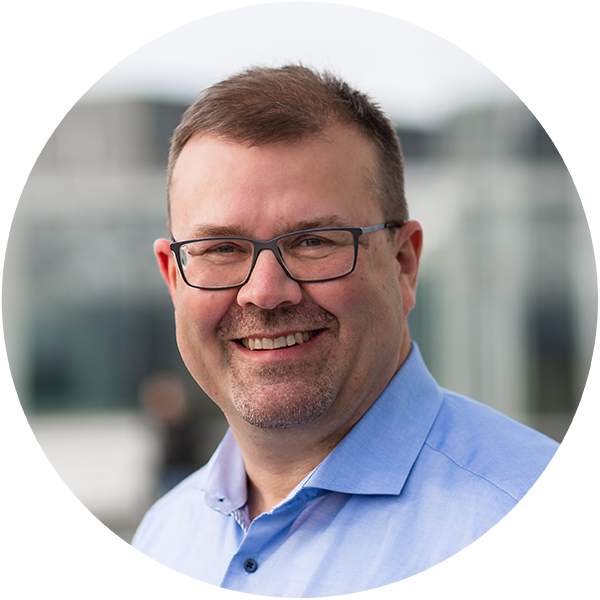
Geoffrey
Senior Segment Manager Pensions/Investments
Senior Segment Manager Pensions/Investments
Having worked in the insurance industry for over 20 years, Geoffrey is an expert in all matters related to life insurance and investment products – especially retirement provision and pension planning. He likes to spend his free time in the mountains or visiting distant countries.
AN APPOINTMENT, PLEASE!
The optimal insurance for you? Let's find out during a personal appointment.
YOU MIGHT ALSO BE INTERESTED IN

Switzerland’s three-pillar system
The three-pillar system is unparalleled worldwide. We explain the Swiss pension system to you in simple terms.

Pillar 3b
Pillar 3b (unrestricted retirement provision) improves your private retirement provision. It also enables you to save tax. Find out more about pillar 3b.

The differences between pillars 3a and 3b
Private retirement provision in Switzerland is known as pillar 3. It offers tax advantages and is divided into pillars 3a and 3b.
Follow us