Die 1. Säule: AHV und IV erklärt
 

The foundation.
Pillar 1 – AHV and IV.

Topics

No meetings. No lunch breaks. No more “Can you please take a quick look at this?” When you no longer have to or are unable to work, you receive money to pay for your subsistence – from the state.

How exactly does this work? We answer these and all your other questions here. 

Pillar 1 is the foundation of the three-pilar system – the state pension. It consists of Retirement and Survivors’ Insurance (AHV) and Federal Disability Insurance (IV). Via pillar 1, the state ensures a minimum standard of living for you in old age, in the event of disability and for your survivors in the event of your death.

Pillar 1 also provides loss of earnings compensation (EO) for military service and maternity and supplementary benefits. In this way, Switzerland fulfils its obligations as a welfare state – and you enjoy the benefits.

Pillar 1 benefits are made up of three components: AHV benefits, IV benefits and loss of earnings compensation. In addition, there are supplementary benefits to the AHV and IV.

Retirement and Survivors’ Insurance is compulsory for everyone living in Switzerland. As a state pension insurance scheme, it ensures a minimum level of financial security in old age and pays survivors’ pensions to widows, widowers and orphans in the event of the insured person’s death. In other words, it benefits everyone. 

You are entitled to an AHV retirement pension from the normal retirement age, which is 65. For women born in 1961-1963, a transitional arrangement applies between the ages of 64 and 65. For married people or people living in a registered partnership, the sum of the two AHV pensions is limited to 150% of the maximum AHV pension.

The loss of a loved one is difficult to bear. To at least reduce the financial burden somewhat, spouses with children are paid a widow’s or a widower’s pension. Women receive the AHV widow’s pension if they have children or are at least 45 years old and their marriage lasted at least five years. Men receive a widower’s pension until their youngest child turns 18. In the case of registered partnerships, the rules on widower’s pensions apply.

For children up to the age of 18 – and up to a maximum of 25 if they are still in education – a half orphan’s pension is also paid out if one parent has died. If both parents die, the children receive an orphan’s pension.

The Disability Insurance scheme, or IV for short, has two levels: it distinguishes between temporary incapacity and permanent disability. In the event of temporary disability, you receive daily benefits for a maximum of two years. If reintegration into working life is not possible after this period, or if your ability to work is limited even after reintegration, you will receive a disability pension.

Despite everything, your reintegration into working life has not been successful. At this point, all insured persons who are at least 40% disabled are entitled to a disability pension. In the case of married couples, two full disability pensions are limited to 150% of the maximum amount – as with the AHV pension.

For children up to the age of 18 – and up to a maximum of 25 if they are still in education – a children’s pension is also paid out if one parent is receiving a disability pension.

If you are no longer able to perform daily activities such as getting up, dressing, eating and showering without help, you are entitled to additional benefits. This applies for as long as you are reliant on assistance from others.

If you cannot pay your minimum living costs with AHV and IV benefits – for example because you do not have any other income or significant wealth – you will receive supplementary benefits under pillar 1.

This scheme compensates people for lost earnings while they are performing military, alternative civilian and civil defence service. It also pays compensation for loss of earnings due to maternity.

  • People who live in Switzerland
  • People who work in Switzerland
  • Swiss nationals working abroad for the Swiss Confederation or for institutions designated by the Federal Council

From birth and until you:

  • move abroad
  • stop working in Switzerland
  • stop working abroad in the service of the Swiss Confederation 
  • reach the normal AHV retirement age. From then onwards, you will receive the AHV retirement pension. Cover for AHV widow’s, widower’s and orphan’s pensions remains in force.

Pillar 1 contributions depend on your salary. The total contribution is 10.6% of your salary. This is divided up between the AHV, IV and EO schemes. Of this, you pay half – 5.3% – and the other half is paid by your employer. (As of 1 January 2026)

You do not have to do anything – your employer simply deducts the AHV/IV contribution from your salary and transfers it together with the unemployment insurance contribution directly to the compensation fund. You will see this on your salary statement. Incidentally, your employer also covers the administrative costs.

If you are self-employed, you have to pay the full AHV/IV/EO contributions – a maximum of 10.0% – yourself.

If you are working, then 1 January of the year in which you turn 18 is the cut-off date. This is when you have to start paying into pillar 1.

Not in employment? Then you pay contributions from 1 January of the year in which you turn 21.

Retiring? In this case, your obligation to pay AHV contributions ends if you retire at the age of 65.

Taking early retirement? Then you will continue to be liable for contributions until you reach the normal retirement age. 

Working beyond retirement age? Then you will continue to pay your contributions. However, the amount is reduced – you benefit from a graduated allowance.

Have you spent an extended period of time working abroad? Did you have an accident and receive daily sickness benefits? Perhaps you did not pay any contributions during your time at university. In these cases, you may have gaps in your AHV/IV contributions. And that is annoying, because it means that your AHV pension will be reduced – by at least 2.3 percent for each missing contribution year.

Apply in writing or online for an AHV statement – known as a statement of individual account – from your AHV compensation fund and see if you have any such gaps. If you notice unjustified contribution gaps, you can request a correction within 30 days.

If you actually do have AHV contribution gaps, you can close them simply by paying the missing AHV/IV contributions retroactively. However, this is only possible for five years after the year of the missing contributions and if you were insured in Switzerland at the time.

If you have contribution gaps because your employer has not paid the contributions, your salary statements will enable you to prove that you worked during the period in question and that your AHV contributions were deducted from your salary. In this case, the relevant contributions will be credited. 

Feel like the time has come to call it a day? The AHV retirement age is 65. You can draw your AHV pension up to two years early or defer it for a maximum of five years. However, you have to apply for this.

The earlier you retire, the less you get. In specific terms, if you draw your AHV pension one year earlier, it will be reduced by 6.8%. The reduction for retiring two years early is 13.6%.

GOOD TO KNOW

Taking early retirement but still want to receive the full AHV pension? This is possible, but only if you do not start drawing your pension until the normal retirement age. Until then, you simply have to continue paying your AHV contributions.

Later means more. You can defer your AHV pension by up to five years. And the longer you wait, the higher it will be:

  • 1 year +5.2%
  • 2 years +10.8% 
  • 3 years +17.1%
  • 4 years +24.0%
  • 5 years +31.5%

You do not have to decide in advance how long you want to defer your pension. As soon as you are one year above the normal retirement age, you can begin drawing it – and enjoying your retirement – at any time. 

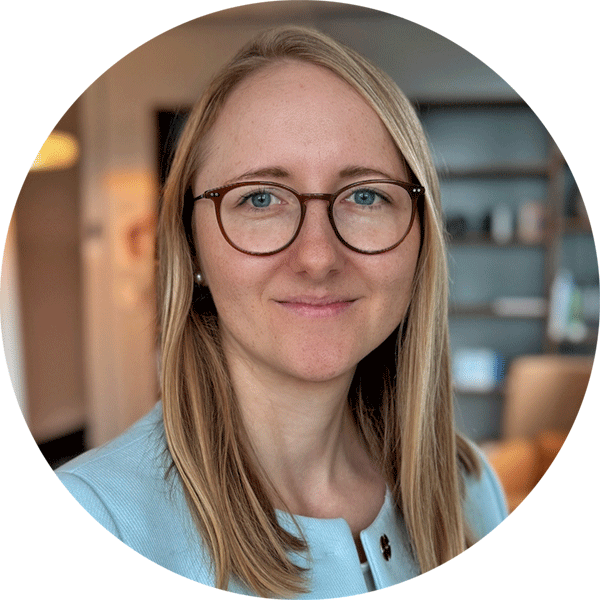
Erika, Senior Segmentmanagerin Unternehmenskunden, Allianz Suisse
Erika
Senior Segment Manager Corporate Customers

Erika has a Master’s in International Relations and has been working in the insurance industry for four years. In her free time, she loves to hop on her bike, go swimming or get lost in the pages of an exciting book. She has a passion for languages and is currently discovering the secrets of Russian and Italian.
AN APPOINTMENT, PLEASE!
The optimal insurance for you? Let's find out during a personal appointment
Follow us