
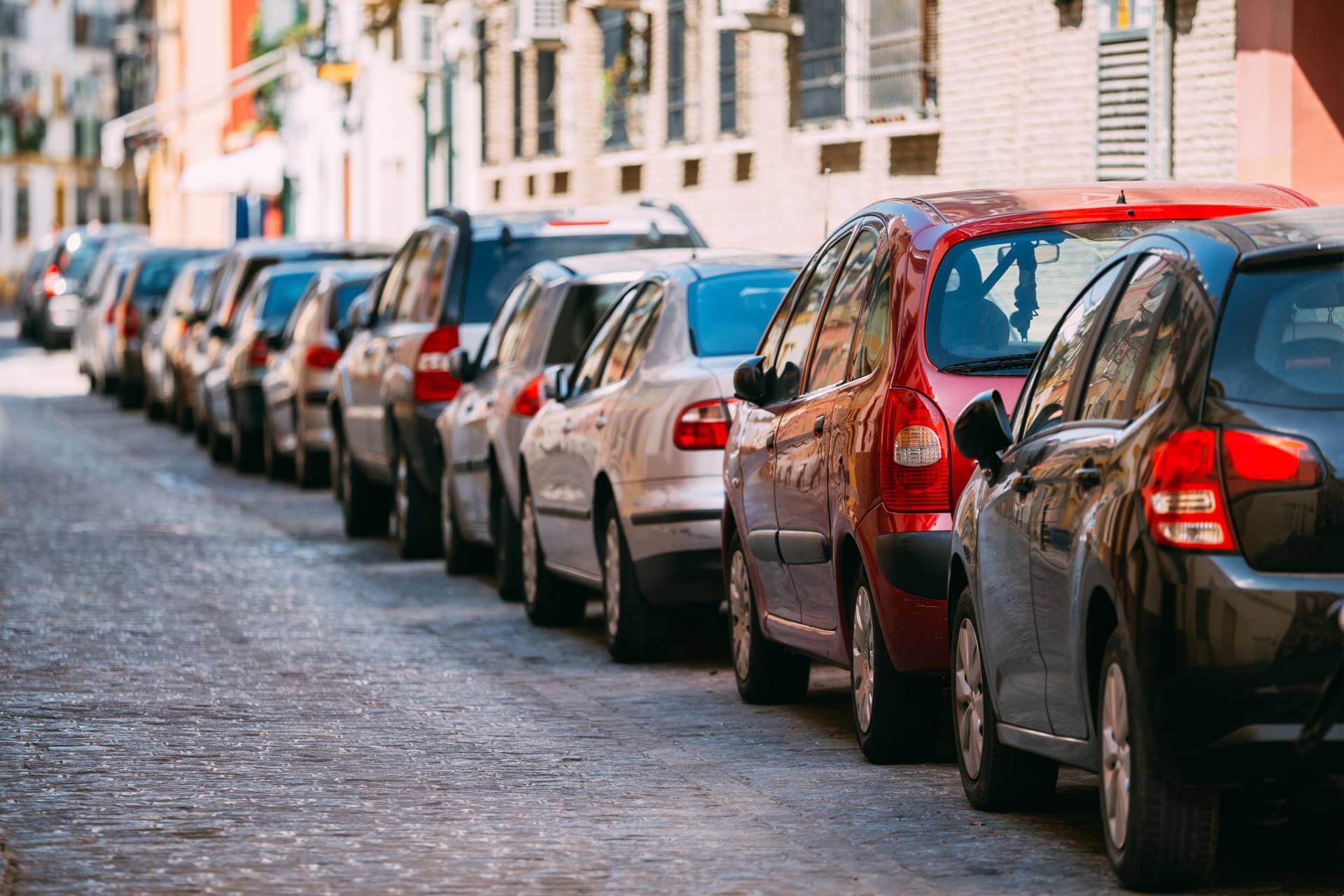
Parked-vehicle damage.
Small incident – big trouble.
Topics
AT A GLANCE
Your car was in pristine condition when you parked it. Now there is a large dent on the bumper. A big shock, of course, but not so much hassle – if you are insured for parked-vehicle damage.
What is parked-vehicle damage?
For insurance purposes, “parked-vehicle damage” is damage to your own, parked vehicle caused by an unknown person. For example, if you come back from a shopping trip to discover a scratch on your left fender that was not there before and you do not know who is responsible.
If you scratch your own vehicle while parking, this counts as a collision for insurance purposes – and is therefore a case for your fully comprehensive insurance.
Who pays for parked-vehicle damage?
If someone scrapes your parked vehicle, he or she is obliged to report the damage. If their identity is known, the liability insurance of the person who caused the damage will cover the damage to the parked vehicle.
However, it is often unclear who was responsible. In this case, your parked-vehicle damage insurance will step in.
What does parked-vehicle insurance cover?
Insurance for parked-vehicle damage must be taken out in addition to your fully or partially comprehensive cover. Parked-vehicle damage insurance covers the repair costs for up to two parked-vehicle damage incidents per calendar year. Depending on the agreement, this can also be without a deductible and without the loss of your no-claims bonus.
If you do not have parked-vehicle damage insurance, you can also have parked-vehicle damage repaired via your fully comprehensive insurance in exceptional cases (goodwill). In this case, however, you will usually have to pay a deductible and you may lose your no-claims bonus. Find out how to calculate the cost of losing your no-claims bonus in our guide to the bonus/penalty system. And if you only have third-party liability insurance, you will usually pay the costs yourself. Alternatively, you can contact the Swiss National Guarantee Fund. More information on this can be found in the following section.
What should I do in the event of parked-vehicle damage to my own car?
Report the damage to your insurer immediately – ideally by phone or online. Document everything with photos and notes so that you have evidence of the damage and the course of events.
GOOD TO KNOW
Don’t have either parked-vehicle damage or fully comprehensive insurance? In serious individual cases, you can contact the Swiss National Guarantee Fund.
This will help you if your vehicle has been damaged by an unknown or uninsured motor vehicle or bicycle. However, you have to pay a statutory deductible of CHF 1,000 yourself. You must also request a police report, and a vehicle inspection is always required as well.
All in all, this is quite a lot of effort – it is usually worthwhile only for serious parked-vehicle damage and is no substitute for conventional parked-vehicle damage insurance.
You caused parked-vehicle damage yourself
If the owner of the damaged vehicle is not nearby, you are legally obliged to wait for him or her and fill in the accident report together.
If the owner does not show up, you cannot simply leave your telephone number. Instead, you must notify the police straight away, who will then find the owner. Otherwise, you may be fined for obstruction of measures to determine incapacity for driving and absconding from the scene of an accident.

Nina
Senior Segment Manager Private Customers
Senior Segment Manager Private Customers
In her over 20 years of experience at Allianz, Nina has worked in a number of areas of the company, including both distribution and the sales force. When she isn’t out and about with her dog, she can usually be found planning her next diving holiday or hike, tending to her garden or meeting up with friends.
AN APPOINTMENT, PLEASE!
The optimal insurance for you? Let's find out during a personal appointment.
YOU MIGHT ALSO BE INTERESTED IN
Fully or partially comprehensive insurance?
Partially or fully comprehensive insurance? We explain the differences and help you to choose the right kind of comprehensive cover for you.
Car insurance
We offer flexible insurance coverage for your car that is perfectly suited to you and your needs. Calculate the costs now.

Household insurance
A good combination is half the battle. Put your household insurance together individually – and benefit from an attractive combined discount.
Follow us